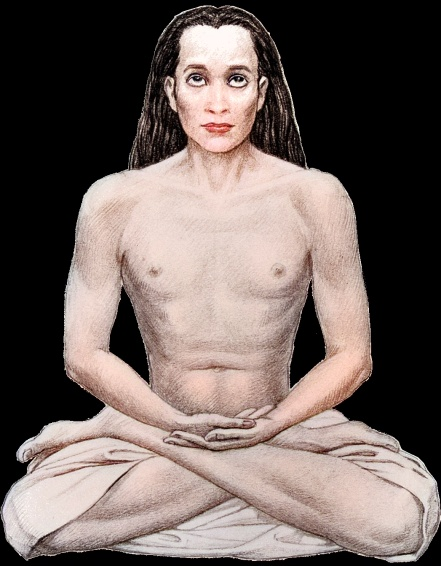
The Enigmatic Mahavatar Babaji: A Glimpse into the Life of the Timeless Yogi
Mahavatar Babaji is one of the most revered figures in the spiritual traditions of India, often regarded as a timeless yogi who has guided humanity for centuries. His presence and teachings have transcended time, influencing countless spiritual seekers across the globe. While much of Babaji’s life remains shrouded in mystery, glimpses of his early life and teachings have been preserved through the accounts of his direct disciples, particularly from both North and South India. This blog post delves into the fascinating aspects of Babaji’s life, drawing on the insights shared by Yogi Ramaiah and the stories of his disciples.
Childhood and Early Life: Insights from Yogi Ramaiah
Yogi S.A.A. Ramaiah, a disciple of Babaji, offers one of the rare accounts of Babaji’s early life. According to Ramaiah, Babaji was born in the 3rd century in a small village in the South Indian state of Tamil Nadu. His birth name is believed to be Nagarajan. From a young age, Babaji exhibited extraordinary spiritual tendencies, often engaging in deep meditation and displaying an innate understanding of spiritual truths that surpassed the knowledge of his peers.
Ramaiah describes how Babaji’s quest for spiritual enlightenment began early. He was deeply influenced by the yogic traditions of the time and embarked on a spiritual journey that took him across the length and breadth of India. Babaji sought out numerous spiritual teachers, learning from each one and deepening his spiritual practices. His travels eventually led him to Kathirkamam in Sri Lanka, where he met his guru, the great Siddhar Bhogar. Under Bhogar’s guidance, Babaji is said to have attained a state of eternal youth and enlightenment, transcending the limitations of the physical body and achieving immortality—a state that allowed him to guide humanity across the ages.
Kriya Yoga and Mahavatar Babaji
Kriya Yoga, as taught by Mahavatar Babaji, is a spiritual discipline aimed at achieving self-realization and liberation through a blend of meditation, breath control (pranayama), and inner awareness techniques. Introduced to the modern world by Paramahansa Yogananda in Autobiography of a Yogi, it is rooted in ancient yogic practices that focus on direct communion with the divine.
The practice emphasizes the awakening of latent spiritual energy (often known as “Kundalini”) by purifying the mind and body. Kriya involves specific techniques to harmonize the breath and quiet the mind, allowing practitioners to transcend ordinary consciousness. Babaji who is considered an immortal yogi living in the Himalayas, is believed to have revived and shared this method to help humanity attain a higher state of consciousness.
The essence of Kriya Yoga is to facilitate deep meditation and spiritual growth, leading to inner peace, heightened intuition, and a profound sense of oneness with all life. Babaji’s Kriya Yoga is often seen as a scientific approach to spirituality, one that can accelerate spiritual evolution when practiced with devotion and discipline.
One of the most well-known disciples of Mahavatar Babaji in North India is Lahiri Mahasaya. Born in the early 19th century, Lahiri Mahasaya was a householder yogi who played a crucial role in making Kriya Yoga accessible to the common people. Babaji is said to have initiated Lahiri Mahasaya into Kriya Yoga in the Himalayan mountains, instructing him to teach this ancient technique to all sincere seekers, regardless of caste, creed, or social standing. Lahiri Mahasaya’s teachings emphasized the importance of balancing worldly responsibilities with spiritual practice, a message that resonated with many.
Another prominent disciple from North India is Swami Yukteswar Giri, who was a student of Lahiri Mahasaya. Swami Yukteswar further propagated Babaji’s teachings and played a vital role in preparing his own disciple, Paramahansa Yogananda, to take the message of Kriya Yoga to the West. Yogananda’s book, Autobiography of a Yogi, is one of the most significant sources of information about Babaji and his mission.
In South India, Babaji’s teachings were carried forward by several devoted disciples, one of whom was V.T. Neelakantan, a respected scholar, writer, and mystic. Neelakantan was deeply influenced by Babaji and was chosen as a vehicle to transmit Babaji’s teachings to the world. His dedication and spiritual connection with Babaji led to the creation of the seminal work, The Voice of Babaji: A Trilogy on Kriya Yoga.
The Voice of Babaji is a profound compilation of spiritual teachings, written in collaboration with S.A.A. Ramaiah and Babaji Nagaraj (who was purportedly channeled by Neelakantan during the writing process). The book is divided into three parts and presents Babaji’s teachings on Kriya Yoga, a sacred yogic practice that helps seekers attain spiritual enlightenment. Through this work, Neelakantan played a pivotal role in disseminating Babaji’s wisdom to a wider audience, particularly in South India, where the book has inspired many to pursue the path of Kriya Yoga.
Mahavatar Babaji remains an eternal beacon of light, guiding spiritual seekers across the ages. While much of his life is veiled in mystery, the accounts of his childhood and the teachings of his disciples offer us a glimpse into the profound wisdom that Babaji embodies. Through the efforts of his direct disciples in both North and South India, Babaji’s message of spiritual awakening and the practice of Kriya Yoga continue to inspire millions worldwide. His timeless presence serves as a reminder of the limitless potential of the human spirit and the eternal quest for divine union.